Narc. Magazine Online
Reliably informed


Niamh Poppleton chats to the North-East author about, Girls To The Front, her new revenge thriller taking inspiration from the 90s ‘Riot grrrr’ movement
Photo by Chris Connel
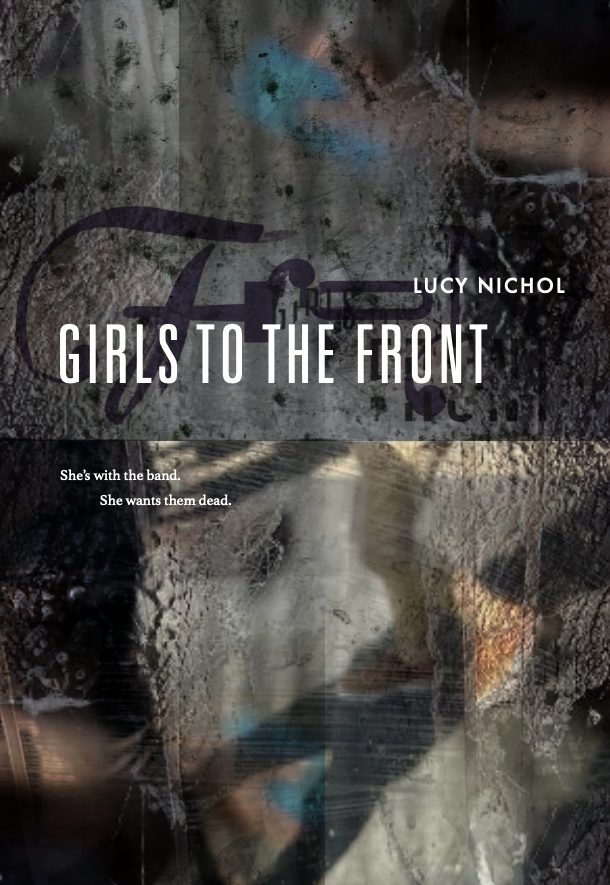
Revolution. Chaos. Retribution. Murder meets musical bite and feminist rage in Lucy Nichol’s ‘Riot Grrrl’ focused, found-footage thriller novel, Girls To The Front.
Nichols explores the safety net that women have found in the feminist movement across decades, and the bittersweet feeling of revenge. She draws on the raw grit of the underground feminist punk scene, Bikini Kill’s ‘Girls to the Front policy’ and Courtney Love’s experience of being assaulted during a stage dive, culminating in a powerful exploration of murder and mayhem.
The 90s served as a period in which feminist advocacy for victims of assault reached its height. Women in the punk movement were sick of the fear of sexual violence at gigs. Riot Grrrl was a retaliation – a reminder that women’s anger is entirely valid and should not be subdued. The novel explores the rage that flowed within the movement, through a tale of vengeance and a touch of dark magic.
Kat, a student journalist in 1995, wields revenge like a battleshield, while her crimes of thirty years prior unfold on the screen before Roma’s eyes in 2025. Its dual timeline narrative poses the question: can women’s safety ever truly be guaranteed?
Girls To The Front serves as an important reminder that the politics of feminism is as prominent today as ever, and remains undoubtedly necessary for women everywhere.
Why did you choose the Riot Grrrl movement as the period of feminism to explore within your novel?
It wasn’t so much picking the movement but a specific issue and gig policy that riot grrrl band, Bikini Kill implemented. Bikini Kill’s Kathleen Hanna would call ‘all girls to the front’ at their gigs to create a safe space for girls and women to enjoy the show without fear of being pushed around or harassed by male audience members. That was the very starting point for the novel – exploring women’s safety through a music-themed revenge thriller. Of course setting it in the 90s (it’s a dual timeline story) came naturally as I’ve already written two books set in that period which I think I can safely say is part of my midlife crisis!
But one thing I particularly find interesting is that, whenever we try to create equality, we are accused of sexism. For example, I remember when academics at Northumbria University, including Dr Louise Ridley who supported my research for this book, spoke out about how many women in prison are there for lower level crimes compared to their male counterparts – and how often these crimes are linked to trying to cope with their domestic situation (often the abuse they experience). So there is an inequality there, but I saw many people saying it was sexist to suggest that the current prison system wasn’t suitable for women. It’s that whole narrative of ‘if you want to be treated equally, then you shouldn’t get special treatment’. So I explored that in the context of the girls to the front policy, with a fictional venue manager suggesting if women can’t take the heat, they should stay out of the mosh pit. But the point is, women were already at a disadvantage as men were making it impossible for them to enjoy a gig safely, so being at the front is equality – it means everyone can enjoy the gig safely. That’s a key part of the storyline in my book as it incenses my main character, Kat and drives her to take the matter into her own hands…hence turning a serious issue into a rather cathartic revenge thriller (it’s fiction, why not!)
Are there any specific musicians who have inspired you during the writing of Girls To The Front?
Yes! I named Kat after Kat Bjelland of Babes in Toyland and Katastrophy Wife fame. I absolutely adored her growing up and still listen to her music and feel sad that she is kind of off the grid so to speak these days. But I was also a huge fan of Courtney Love and Hole and I remember Courtney speaking out about being attacked during a stage dive. Of course she has also spoken out about the impact of imbalanced power dynamics in the entertainment industry and was one of the first to call out Harvey Weinstein and warn young actresses to be careful around him. So Courtney is of course a big influence too.
I was also incredibly lucky to get to spend time chatting to Miki Berenyi of Lush / The Miki Berenyi Trio who was so generous in sharing her insights and experiences as a female musician (and fan) in the 90s – and she has recently spoken a lot about sexism during the BritPop period. Her memoir, Fingers Crossed, also provides some of this insight and it’s such a deeply personal and powerful read so I highly recommend grabbing a copy!
Obviously I’ve already mentioned Bikini Kill and Huggy Bear (who had ‘girls to the front’ on their gig publicity – and that is also specifically referenced in the book.
What do you feel are the main issues raised by the novel that affect our society today?
I asked the question on social media about whether women feel safe at gigs today and, sadly, there are still serious issues. People told me how their daughters were now afraid of needle spiking – something I had never considered when I was younger. And this is something we’ve seen in the news just this year as 145 people reported being needle spiked at a festival in France. I think there’s also the equality narrative, as already mentioned, that needs to be challenged. If there is an inequality that needs addressing, sometimes we can’t just see everyone as equal. Because until that danger/disadvantage is erased, we need to level up proactively first.
We also still see countless documentaries about abusive men in the entertainment industry who have used their power to get close to and harm women. So while I watched the documentaries ‘Look Away’ about the sexual abuse of young girls in the music industry in the 70s and 80s, and Woodstock ‘99 about the sexual assault that took place many years ago there, this is clearly still very much an issue today.