
Narc. Magazine Online
Reliably informed

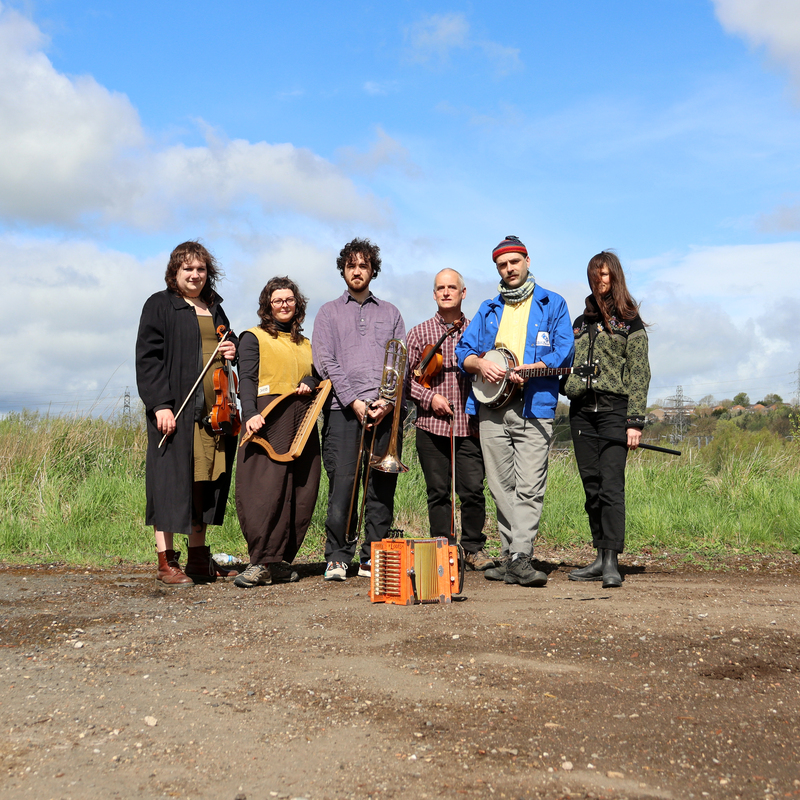
Multi-instrumentalist Gus Beamish from Newcastle folk band Powtes expands on the band’s influences
Powtes formed from Newcastle’s fertile improvising and folk scenes around 2023, particularly the Collective Studio programme at Newbridge Project. They play a kind of chamber folk music that’s intense and beautiful and rousing (think perhaps Shovel Dance Collective meets Caroline) and their songs look at the history – and current resonances – of the draining of the Fens, the enclosure movement and popular resistance.
Here, multi-instrumentalist frontman Gus Beamish offers us five key influences on the Powtes sound and lyrics.
Harry Burgess – Live Scraps EP/Fall of Troy
I played at the gig where this was recorded and it made a big impression on me. Harry is part of the band Adult Jazz, whose music I also love, and is also a composer and songwriter. The resistance to using the guitar to play chords is fascinating to me. It creates a much more direct dialogue between the semi-spontaneous vocal lines and the harmonic content of the guitar. It’s almost music that could be performed by a three-part or maybe four-part choir. I love the way that it reconfigures melodic folk traditions. It’s ‘folky’, but not in the sense of ersatz, singer-songwriter schmaltz. It references, dredges, and plays with folk melody in ways that I found very inspiring and definitely played a big part in how I wrote melodies for the record.
A thorough history of resistance to the drainage and enclosure of the Fens. Many of the songs are based on accounts from this book – Axeholme Pt 1 and Pt 2 for example. I read this book during a phase where I was really interested in the beginnings of capitalism on this island. I’m from a place on the edge of the Fens, and reading this account kicked off a fascination with the histories of violent resistance. It’s important to connect with these histories because it isn’t over yet. We are still living in the midst of a long process of enclosure and accumulation.
Sacred Harp singing has been a big part of my life since I moved to Newcastle. It’s where I met Phil Tyler and then became aware of the music that he plays with Cath (as Cath and Phil Tyler). It’s a singing tradition that brings together Appalachian and English folk traditions within a devotional, group singing context. It’s mostly sung in four parts, with the central melody often borrowed from what would have been familiar folk tunes at the time that they were written. It’s a living tradition that takes a non-hierarchical approach to its reproduction, with an active and convivial community that is open, accepting, and places communalism at its centre.
There’s something levitational about the folk music of Sardinia. The way that it uses and plays with repetition in particular is something that I love. This is something found in other folk musics, but the sheer force of repetition and ornamentation in the group singing of Tenores di Bitti does something to me. Similarly with the ecstatic maximalism of the Launeddas playing by Dionigi Burranca. I originally started writing these songs by putting together ornamented melodies that moved around fixed drones, and I think this music (and various piping music) was a big influence.
I love this album, and I love this band. I love the way that the songs often dissolve and take a free approach to metre and rhythm in order to afford more space for emotional intensity. It leans into overwhelm and excess and yields to beauty. The songs are welcoming, intimate, but frequently explode in unpredictable ways. I also love the way that organic acoustic spaces are used on this record in particular – things recorded from a distance in what sound like small, domestic spaces. This approach to recording was a big part of making the record. You can definitely hear the room resonances from the three different houses that we recorded in, and I didn’t try to keep them out.
Powtes release Green Afterglow, the second from their debut album Destroying A Living, on June 18th, with the album itself following on August 7th, on Ferric Mordant.
