
Narc. Magazine Online
Reliably informed

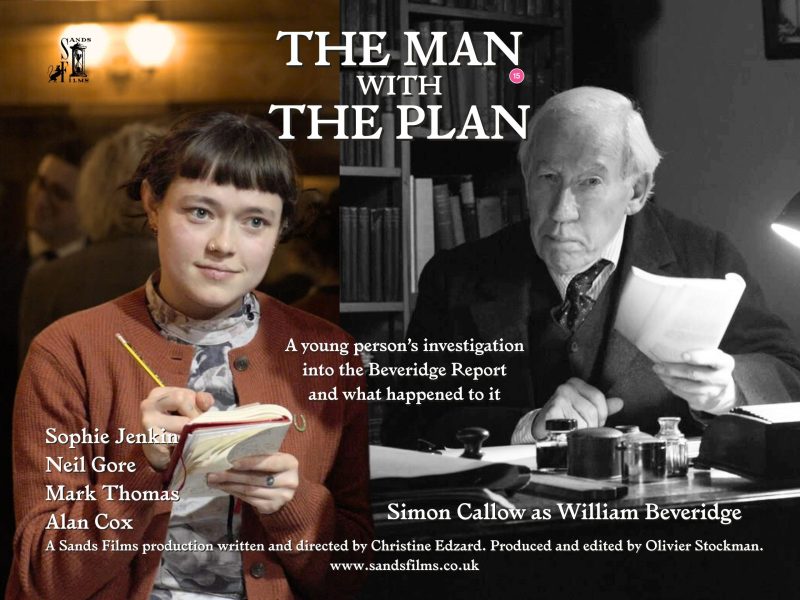
Olivier Stockman, Managing Director of Sands Films, tells us about his top five political films as they take their grassroots political drama The Man With The Plan to Tyneside Irish Centre (8th October), Redhills Durham Miners’ Hall (9th October) and Redhouse Micropub, Chopwell (11th November)
Sands Films brings their grassroots political drama The Man With The Plan to Tyneside Irish Centre on Thursday 8th October — a bold, imaginative dive into the 1942 Beveridge Report and its relevance to the crises shaping Britain today. The film follows Flea, a young student swept into a fantastical journey through Beveridge’s Five Giants — Want, Disease, Squalor, Idleness and Ignorance — colliding with decades of politicians, missed chances and unfinished promises. Blending archival text with inventive storytelling, it’s a vivid reminder of Beveridge’s original vision and a pointed call for action in the present. After the screening, producer and editor Olivier Stockman will discuss the making of the film and its community‑driven mission, ahead of further North East dates at Redhills Durham Miners’ Hall (9th October) and Redhouse Micropub, Chopwell (11th November).
Olivier Stockman, tells us about his top five political films ahead of the screenings…
THE MAN WITH THE PLAN is showing around the country. It is a difficult film to classify, but as it deals with William Beveridge’s plan for a better, fairer and more equitable society, it is reasonable to call it a political film. Indeed it is a call for action.
How to define political films? Some will argue that all films are political simply by the choice being made to talk or remain silent about certain issues; others will define political films purely by the intention of the filmmakers to be political… Here I have chosen five films that have had a political impact on the audience. In no particular order.
1. The Battleship Potemkin (1925)
Sergei Eisenstein’s dramatisation of the 1905 mutiny became one of the most politically effective films ever made. Its revolutionary message and pioneering montage techniques—especially the Odessa Steps sequence—were banned in many countries for fear of inspiring unrest. The film served as propaganda for the Soviet state but also as a universal template for political cinema, influencing activists and filmmakers worldwide. Its imagery has been referenced in countless protests and films, proving that cinema could mobilise masses, shape revolutionary consciousness, and remain a potent tool of ideological struggle for a century.
2. I, Daniel Blake (2016)
Ken Loach’s Palme d’Or winner exposed the human cost of Britain’s welfare system and austerity politics. Following a carpenter denied benefits after a heart attack, the film sparked national outrage and parliamentary debate about the cruelty of sanctions and Universal Credit. It prompted real-world activism, with charities reporting increased awareness and the film being screened in food banks and community centres. Loach used it to directly challenge Conservative welfare policy, and the film became a rallying point for disability and anti-poverty campaigners, demonstrating cinema’s capacity to translate individual suffering into collective political anger.
3. An Inconvenient Truth (2006)
Davis Guggenheim’s documentary transformed Al Gore’s climate lectures into a global political phenomenon. It brought climate change into mainstream consciousness, making global warming a moral and political issue rather than a distant scientific concern. The film won two Oscars and contributed to Gore receiving the 2007 Nobel Peace Prize. It pressured governments and corporations, fuelled the environmental movement, and inspired millions to change behaviour. Though criticised by climate sceptics, it shifted public opinion and helped make climate policy a central electoral issue, proving documentary film could drive international political agenda-setting.
4. Bowling for Columbine (2002)
Michael Moore’s Oscar-winning documentary interrogated America’s gun culture and violence following the Columbine massacre. It sparked fierce national debate about gun control, media fearmongering, and American foreign policy. The film’s confrontations—particularly with Charlton Heston—became cultural flashpoints. While critics accused it of manipulation, it energised the gun-control movement and demonstrated documentary’s commercial and political power. It won the Academy Award for Best Documentary, and Moore used his acceptance speech to condemn the Iraq War, cementing the film’s legacy as a provocative catalyst for progressive political activism and debate in Bush-era America.
5. The Great Dictator (1941)
Charlie Chaplin’s satirical masterpiece mocked Hitler and fascism before America entered WWII, a politically courageous act when isolationism and antisemitism were widespread. It was banned in Nazi Germany and occupied Europe. The film’s closing speech, urging humanity toward democracy and kindness, became one of cinema’s most famous political statements. It helped shift American public opinion against fascism and remains a powerful anti-reactionary work, so much so that it branded Chaplin as a socialist lefty and the McCarthy administration managed to ban Chaplin from the USA.
