Narc. Magazine Online
Reliably informed

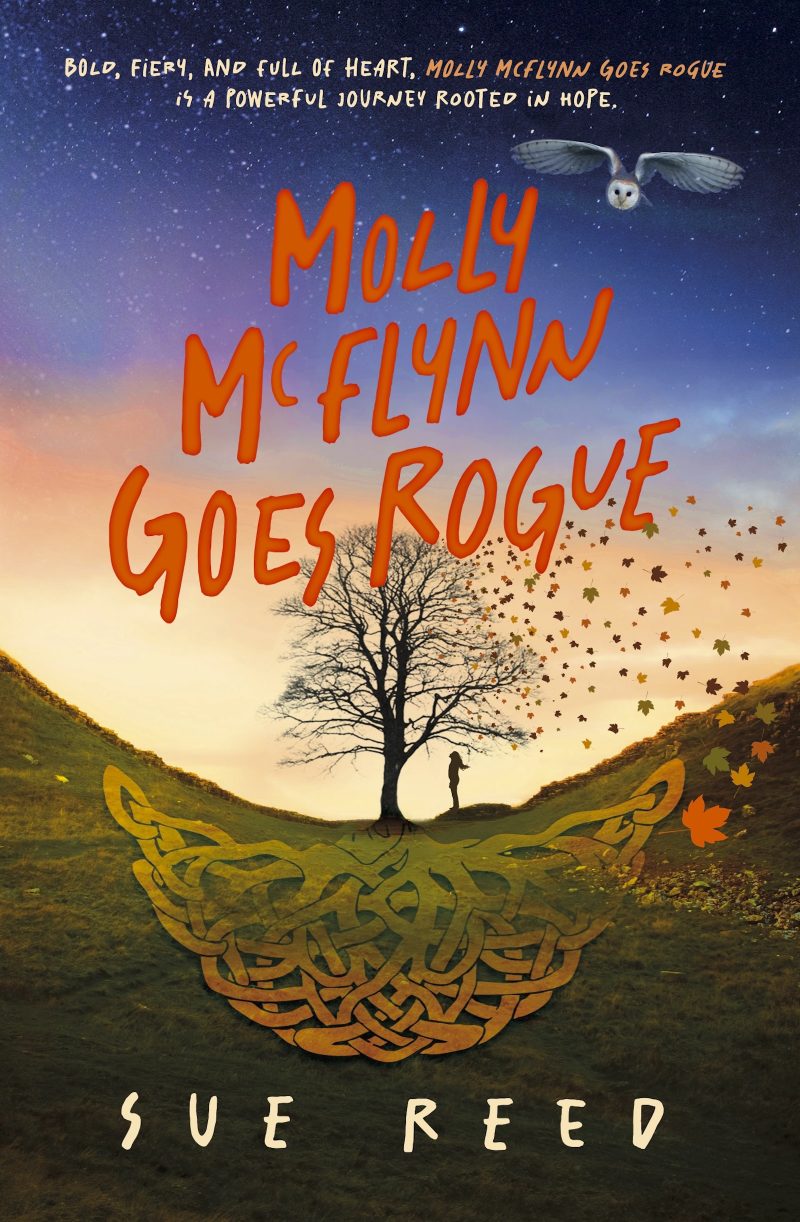
Joanna Long catches up with the Northumberland author as she releases her new book Molly McFlynn Goes Rogue, a story which uses the felling of Sycamore Gap as a starting point and explores power of community and what can happen when ordinary people who care come together
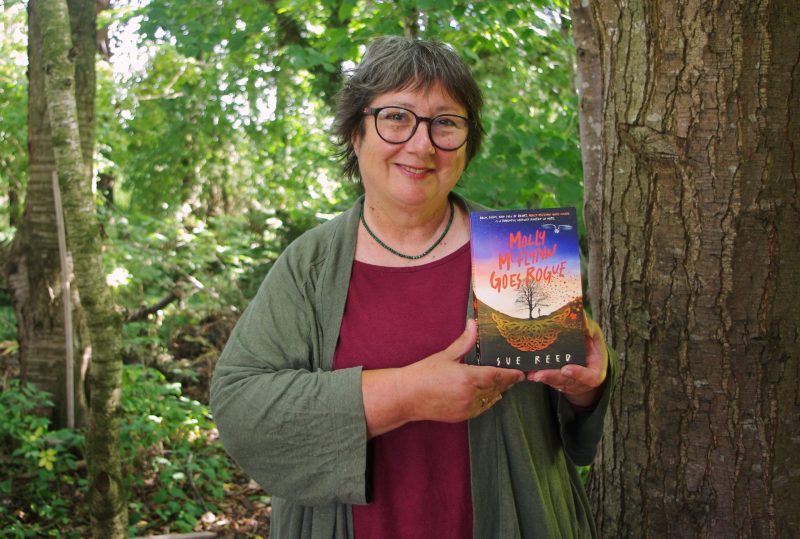
Northumberland author Sue Reed returns to the world of teenage eco-warrior Molly McFlynn with a story rooted firmly in the Northeast landscape, exploring community, grief, environmental action and the courage to stand apart from the crowd. Joanna Long caught up with Sue to talk about the real women behind the formidable Nan, the loss of the Sycamore Gap tree, finding positivity in anger and why sometimes we all need a little fire in our bellies.
I love Nan’s character. She is nurturing, defiant, stubborn and very clear about her values. How much of Sue Reed found its way into her?
It is deliberate. A lot of people say they love Nan, and I think it’s Nan that gives the book its crossover appeal. The booksellers say this is YA and it has to go on the YA shelves, and I really struggle with that.
Nan is a lot of me. She’s a mix of me, my own Nanny Dora, who was my absolute ally in life, and my other Nan, Nanny Gwen. My two Nans lived on the same council estate. One was sort of Hyacinth Bucket and did embroidery, you’d go round and she’d say, “Do you have your work with you, dear?” The other was really “cor blimey”, with a roll-up stuck to the bottom of her lip. But there’s also a big dollop of fiction in Nan as well; she’s a hybrid.
Molly isn’t a perfect teenager or eco-warrior. How important was it that she felt real rather than simply carrying the environmental message?
You have to have a well-rounded character and have those contradictions. I guess I didn’t really overly think it. Molly just happened like that as she came to the page.
In ‘The Rewilding of Molly McFlynn’, at the beginning, we really don’t like her. She’s trying to fit in, but then has this growing awareness of, “I am different and it’s okay to be me.” When I went into schools, it was often the neurodivergent kids, the trans kids, the kids who knew they were different but were really struggling with it. Four students came back after one talk and said, “Thank you. I actually saw myself in that.” Another person said, “You’ve written a book with me in it.”; I was absolutely choked. If Molly can help students be seen, that’s so important.
Rather than an age bracket, whose hands would you most like to put this book into?
People who have a fear for the future; climate fear, environmental fear. It’s about grassroots community action. It’s about our communities coming together and ordinary people who care. It’s the ordinary people who care I would like to read this novel, people with a conscience, and then hopefully pass it on to people who haven’t got a conscience, to inspire.
Sycamore Gap carries enormous emotional weight in the story. When did you realise its loss belonged in Molly’s world?
We live just down the hill from Sycamore Gap, so we are here in the landscape, and the landscape around me really influences my writing. The morning after it was felled, I saw that picture of the tree slain and absolutely couldn’t believe it. I went into Hexham, and people were talking about it, a waitress locked herself in the toilet, and I could hear her sobbing. There was a man sitting at a table who was absolutely choked too. I remember thinking, “Wow, this is really powerful and this needs documenting.” At the time, my own mum was very poorly and subsequently died. Through that experience of my own personal grief and the grief of the community around the tree, I thought, right, here we’ve got it; personal grief and collective grief.
We both heard “it was just a tree” repeatedly afterwards. Why do you think its loss affected people so deeply?
How many people’s ashes have been spread there? How many people have got down on one knee and proposed at that tree? It was a symbol of the Northeast. Forget your Angel of the North, that tree was the symbol of the Northeast, and the Northeast was desecrated by that felling. I’ve got goosebumps talking about it.
There’s a tension between modern life and something older and slower throughout the book. Have we forgotten how to simply be present?
I think there’s growing awareness. There’s almost a trend for slow living among some people, but it’s something I’ve always lived. With climate change and the heat of the summer, surely people are putting two and two together? We’ve still got people jetting off to Spain and then sitting there going, “It’s too hot, I can’t stand this.” Join the dots, love!
And we can all do something. You might only have a balcony, but you can get a bucket, put some rocket seeds in and do something. We’ve all got personal responsibility.
There’s anger in the book too. Can anger be useful when it becomes action rather than hopelessness?
Absolutely. I think in order to have action, you need to have anger first, particularly as girls and women, we’re told, “Don’t be angry, don’t make a noise, be quiet.” Why not? There’s every need to raise my voice. I’m angry. I’m cross about this. We do need to be loud sometimes and it’s okay to be angry. You’ve got to have fire in your belly if you’re going to go and do something. You can’t just simper along and hope it’s going to happen.
Terry Nixon is spectacularly obnoxious, but you resist making him a straightforward villain. Why?
All your characters have to have an emotional arc in your writing, otherwise they’re flat. I didn’t want him just to be the villain. He needed that chance to come round. And I didn’t want Mum to just dump him either, you know. That wasn’t my right just to force her to dump him, you know. She’s got a journey to make, and you know, maybe Terry’ll appear again, who knows?
I think as well, you know, I have sort of quite fixed views about things, and for a long time tended to avoid people that voted differently from me, that lived differently from me. It’s been a learning curve for me to listen, but I went to a talk called Radical Empathy about not always being ready to force your opinion on other people, but listening with calmness and patience, and I think if we’re going to get anywhere, we have to develop that listening ability.
One final curveball. Terry is put in charge of protecting one Northeast landmark for a year. What are you entrusting him with, and will it survive?
I’d put him back on the Wall! I think we’d have him freezing his butt off up there. I’d put him in charge of something like Vindolanda or Housesteads. He’s a builder after all, he could bring so many skills to it. A bit of community service wouldn’t go amiss. Whether he’d do a good job depends on what he was gaining from it. I think he’s a man who would always want to know, “What’s in it for me?” If we made him think it was a project he’d be really good at and bigged up his self-importance, he would make a good job.
Sue Reed’s writing might carry environmentalism at its heart, but Molly’s world is ultimately about people; those who feel different, those prepared to care, and those willing to make some noise when something matters. And perhaps that’s why Nan and Molly work so well together; one is still discovering that being different can be a strength, the other has lived long enough to know there’s very little point pretending otherwise, and why should we?
As for Terry Nixon? We’ll leave him freezing his butt off on Hadrian’s Wall; Nan can project manage.
To purchase Molly McFlynn Goes Rogue, head to Sue Reed’s website.