
Narc. Magazine Online
Reliably informed

Lee Fisher enjoys a dizzying and distorted folk performance from Milkweed
Image: Powtes by Lee Fisher
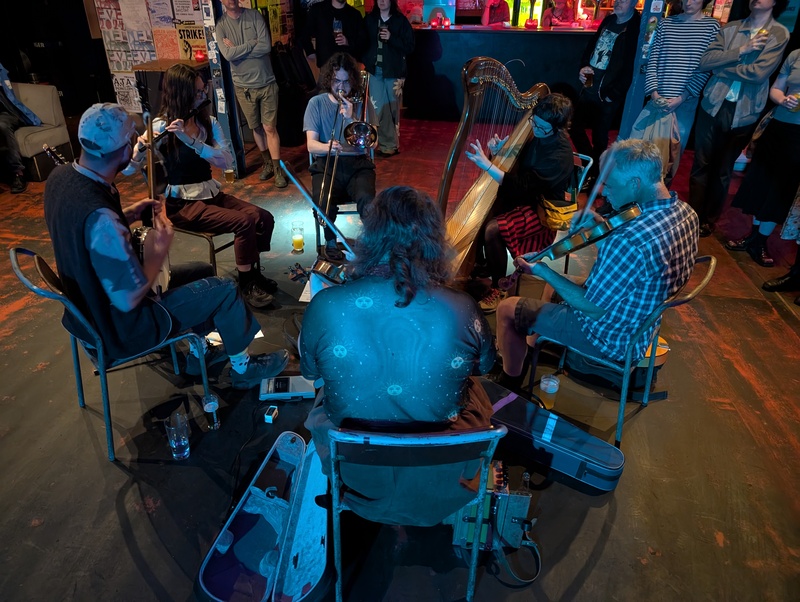
After some near misses, tonight I finally got to see Powtes and I wasn’t disappointed. A newish folk collective from Newcastle fronted by Gus Beamish, they played on the floor in the round which brought a proper folk session feel to the Fiend. As Gus explained, all their songs – a mix of originals and trad versions – concern themselves with the impact and consequences of the 17th century enclosure of the Fens, through which broader ideas about land, workers and property can be considered. It might sound very dry but the music was anything but – some beautiful arrangements of trombone, fiddles, harp, guitar, banjo, flute and accordion moved from gentle to rousing, the trombone in particular sounding brilliant. Comparisons with Shovel Dance Collective are probably inevitable but Powtes are very much their own thing and you should see them if you get the chance.
You’d have sworn Jack Name was a New Yorker – from his sonorous voice and his hints of Television, Velvet Underground and even Jeffrey Lewis – but he’s from L.A. and he’s great. Putting a vaguely anti-folk/post-punk solo act on between Powtes and Milkweed might seem weird but Name seemed to win everyone over with a set of often quite abstract material, lots of spindly lo-fi jangle and rhythms built by looping slaps on the guitar body. Things took a while to cohere but by the time he did the hypnotic In A Velvet Twilight, he had the room.
Given how fractured and cut up Milkweed’s recordings are, it wasn’t quite clear how they’d work live but it was better than you could have hoped. The mysterious G (voice, FX, bells and whistles) and R (banjo) sit facing each other in near darkness and relate – in harrowing, intense, often grisly form – the legend of Táin Bó Cuailnge. And you could have heard a pin drop, we were all so invested. G’s voice is a thing of dread and wonder as she declaims the stories and wails in sorrow and pain, absolutely inhabiting the stories as the bloody, brutal legend unfolds, while R wrenches alarming, eldritch sounds from his banjo. There were moments of pure drama (G isn’t above pure theatricality) and moments of austere martial momentum. Milkweed are folk at its most distorted and most modern but also most ancient, adding up to a dizzying, alarming experience.