
Narc. Magazine Online
Reliably informed

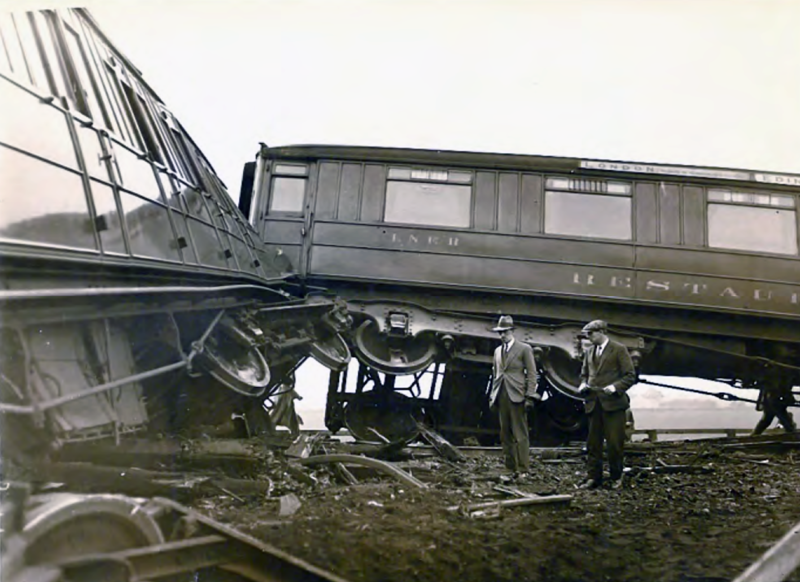
Chloe Glover talks to the Northumbrian playwright about his new production which spotlights a remarkable true story of striking miners
Image courtesy of The Working Class Movement Library
Northumberland-born writer Ed Waugh is a true people’s playwright. A champion of working class histories, he has helped bring to the stage forgotten and entertaining stories of what he describes as “ordinary people doing extraordinary things”, from WWI female footballers and a miner-turned-champion rower, to a bard of Tyneside. His latest play, The Cramlington Train Wreckers, spotlights the true story of striking miners who accidentally derailed the Flying Scotsman during the country’s national strike, almost a century ago.
“I wanted to write a play about the General Strike for the centenary in 2026,” explains Ed, whose nine date tour starts, fittingly, in Cramlington on Thursday 7th November. “When I read about the Cramlington train wreckers in Margaret Hutcherson’s book Let No Wheels Turn: The Wrecking of the Flying Scotsman, I discovered that the person who turned against his fellow miners in court was Lyle Waugh. Was I related to him? Researching my family tree said I wasn’t, but my interest in the subject was truly piqued.”
A series of well-attended regional talks hosted by Ed and his team on the true event proved the catalyst for the creation of the play, which stars a tight-knit team of three actors; Russell Floyd, who also directs it, Mickey Cochrane and Alex Tahnee. Seen through the eyes of Bill Muckle, one of eight Northumberland miners imprisoned for the derailment of a train on 10th May 1926 (and who also wrote an autobiography of his experiences, No Regrets), it takes place during the nine day General Strike.
“Around 40 striking miners, fed up with living in poverty, no statutory holiday pay and under threat from a 40 per cent wage cut, took up a rail with the intention of waving down and stopping a blackleg coal train they felt was undermining the strike. Unfortunately, they accidentally derailed a passenger train, in which thankfully no one was killed,” explains Ed. “What they did could have been mass murder, but we need to understand why they did it. Were they terrorists or were they, in the context of a polarised society, people trying to defend communities and their jobs?”
Were they terrorists or were they, in the context of a polarised society, people trying to defend communities and their jobs?
The relevance of the play’s context to contemporary society was not lost on Ed. “The General Strike has tremendous parallels to today. The rich were getting richer and holding onto their money, the value of wages for working people was going down, money was being used to fight wars instead of improve society for the many and there was a flu epidemic.”
Like his other plays written with friend and fellow playwright Trevor Wood, the play hopes to leave a positive community legacy behind. “Involving communities is integral to our work,” muses Ed. “Previously, we’ve had blue plaques erected and supported community projects. This time, Cramlington Learning Village are going to put on an exhibition in conjunction with the play and Cramlington Choir will sing folk protest songs on the opening night.”
Documenting working class histories will continue to remain at the forefront of Ed’s creative drive, who has plenty of other ideas up his sleeve for the future.
“I’m a proud Geordie journalist. I love the people here and we’ve got great stories. Unfortunately history has focused on teaching us about kings and queens, but what excites me is working class history and the ordinary people who have done extraordinary things. They may have regional roots but their stories transcend the North East. All I want to do is be a conduit for these people.”
