
Narc. Magazine Online
Reliably informed

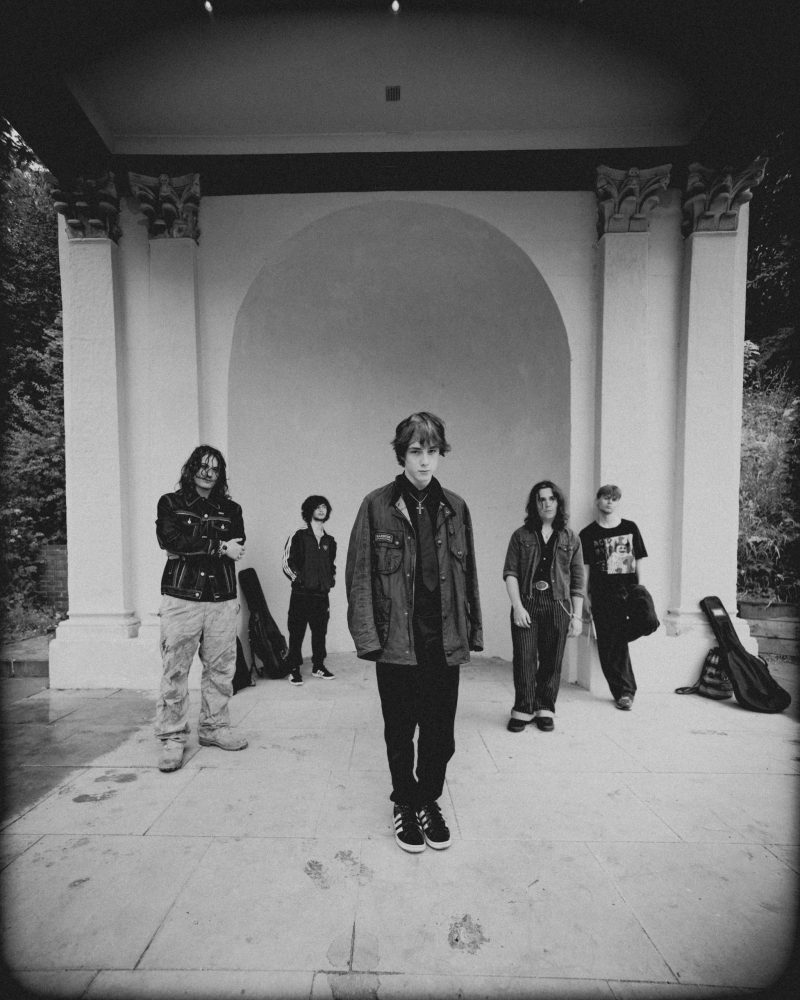
The Teesside metal outfit talk to us about the release of their explosive new EP, Nihilistic Majesties
Teesside sludge/doom/alt metal outfit The Larches return with Nihilistic Majesties, a five‑track plunge into murky distortion, slow‑motion chaos and the bleak intensity that’s become their signature. Recorded at Harbourmaster Studios and shaped under the ear of Martin Trolloppe, the EP captures the band at their most feral and focused, distilling early sludge influences into something heavier, darker and unmistakably their own.
Their new EP kicks off with a full‑on hardcore assault on Raxidermy, its breakneck beats and gravelly guitar collapsing into discordantly addictive riffs, aggressive staccato and satisfyingly feral screams, before hurtling into Smother The Hero, where gravely growls melt into smoother, emotive choruses and pull the band toward stadium‑metal territory with super‑satisfying drive‑time riffs and big crashing rhythms. Midway through, the EP shows no sign of letting up — and why would you want it to — machine‑gun drum hits, guttural unhinged vocals and sharp riffs tear forward until they break into the contemplative clearing of Drought, a six‑minute epic that sits somewhere between the heavier psychedelic edges of The Beatles and the sombre weight of Metallica, with a dash of Pearl Jam thrown in. The vocals take centre stage with aplomb until the intensity shifts and rock ’n’ roll chaos breaks loose, eventually waltzing into a sonic pit of despair. Dopeslut finishes things off nicely with industrial grind, mind‑scrambling solos and relentless rasping vocal.
As a whole, the EP is an exhilarating thrill ride through alt soundscapes, pulling from a variety of eras and using pace, intensity and shade to create a tapestry that can be admired by all but analysed and devoured by the rock faithful. From a band so young, this is a superb bit of music‑making.
We caught up with the band to find out more…
You formed in 2023. How has the band evolved over the years?
We’d definitely say the band has had an extreme shift in weight as far as the songs go, and these years have gave us a good run up to finding the sound we thrive to be with originals. In 2023 we played a lot lighter music that got a lot of attention, yet we felt going heavier wasn’t an option, it was more of a necessity with us. We stopped being so content in playing in standard tuning and went lower and lower. Since 2023 we’ve found a groove with writing and find ourselves on a lot more of a consistent basis in songs belonging to the same specific genre.
What have been some of your favourite achievements in that time?
Playing shows to a more tailored and refined audience has been a big achievement for us and led to some massive opportunities. Mainly working with Byker Grave and Vulgarfest to name a few has allowed us to get our name out in the correct audience and places. However I think our most recent announcement supporting some huge bands who we all take great influence from is our biggest achievement yet. This gig is of course our support slot for Eyehategod, Pig Destroyer, Wormrot and 2 other great bands, we thought we were dreaming when we landed this gig so massive thanks to Byker Grave again!
What’s the alt scene like in the North‑East right now, and where do you feel The Larches fit within it?
The alternative scene within the north east we feel is a dying breed. In the north east in general there’s some amazing bands and a somewhat bustling scene, however closer to home for us in the Teeside area it’s almost dead, we’ve noticed a lot less attention and ticket sales. Overall we feel that more attention should be on the North. Some talent we’ve seen come out of the area is unbelievable and its bleak industrial fog gives the music some kind of bittersweet aura.
Briefly describe your songwriting process.
Songwriting usually involves Sonny & George writing and putting ideas into the PC to form it into a song then program some drums to go along with Sonny’s guitar. They then jam it out and bring it to practice for the rest of the band to learn and chip in with their own parts. The lyrics come mainly from Sonny & Noah with a bit of input from everyone along the way.
Nihilistic Majesties is described as your most feral and focused work yet. What did you want this EP to represent for The Larches as a band?
For us, Nihilistic Majesties was about stripping everything back to what makes The Larches feel authentic. We wanted it to capture the rawest version of the band—less polished, more instinctive, and emotionally direct. Calling it our most feral and focused work wasn’t about being louder for the sake of it; it was about trusting our gut and committing fully to the songs without overthinking them. The EP represents a point where we felt comfortable embracing the chaos while still having a clear sense of purpose. It’s a snapshot of where we are creatively, and hopefully it sets the tone for everything that comes next.
The record leans into suffocating sludge, textured noise and slow‑motion chaos. How did you shape that atmosphere in the studio?
We wanted the record to feel immersive rather than just heavy. A lot of that came from letting the songs breathe instead of filling every space. We’d layer guitars with different textures rather than just adding gain, let feedback and noise become part of the arrangement, and avoid polishing away the rough edges as we feel that small imperfections adds more character. The slower passages were just as important as the loud ones because that’s where the tension builds. We also tried to capture performances that felt human rather than perfect, so if something had a bit of grit or unpredictability but added to the atmosphere, we’d usually keep it. The goal was for the EP to feel less like a collection of songs and more like being pulled into this dense, oppressive world that gradually closes in around you.”
You call the EP “a sermon from the void.” What ideas or emotions were you wrestling with while writing these tracks?
That phrase summed up the headspace we were in while writing. The songs came from dealing with feelings of isolation, disillusion and the constant noise of modern life, where everything feels louder but somehow less meaningful. We weren’t trying to preach or offer answers—that’s where the ‘sermon from the void’ idea came from. It’s more about confronting those uncomfortable emotions and letting them exist without dressing them up or forcing some neat resolution. There’s anger in these songs, but there’s also vulnerability, frustration and a strange sense of acceptance. We wanted the EP to reflect that tension, where everything feels like it’s on the verge of collapse, but you’re still searching for something real in the middle of it.”
Fans of Acid Bath, Eyehategod and Crowbar will find a lot to love here. Which influences were most present during the making of this EP.
Those bands definitely set a benchmark for what heavy music can be emotionally as well as sonically, so it’d be hard to say they weren’t part of the DNA somewhere. But we weren’t consciously trying to recreate any one sound. We were drawing from a mix of sludge, doom, hardcore and progressive alongside artists that understand the power of space and dynamics as much as distortion. More than specific riffs or tones, it was the attitude we took from those influences—the willingness to let songs breathe, embrace discomfort and put atmosphere ahead of technicality. If people hear echoes of Acid Bath, Eyehategod or Crowbar, that’s a huge compliment, but we hope the record ultimately feels like its own thing rather than a tribute to the bands that inspired us.”
Your shows are known for being explosive and immersive. How does the new material translate to the stage?
The live show has always been a huge part of who we are, so we were conscious of that while writing these songs. Even though the EP leans into slower, more oppressive moments, we wrote everything with the stage in mind. The heavier sections hit even harder live because you can actually feel them in the room, and the quieter, more atmospheric passages create this tension that makes the explosions feel even bigger. We don’t really see the songs as something that should be reproduced perfectly—they evolve once they’re in front of an audience. Every show brings a different energy, and we feed off that. If the record feels like being pulled into the void, the live set is what it feels like to stand in the middle of it.
