
Narc. Magazine Online
Reliably informed

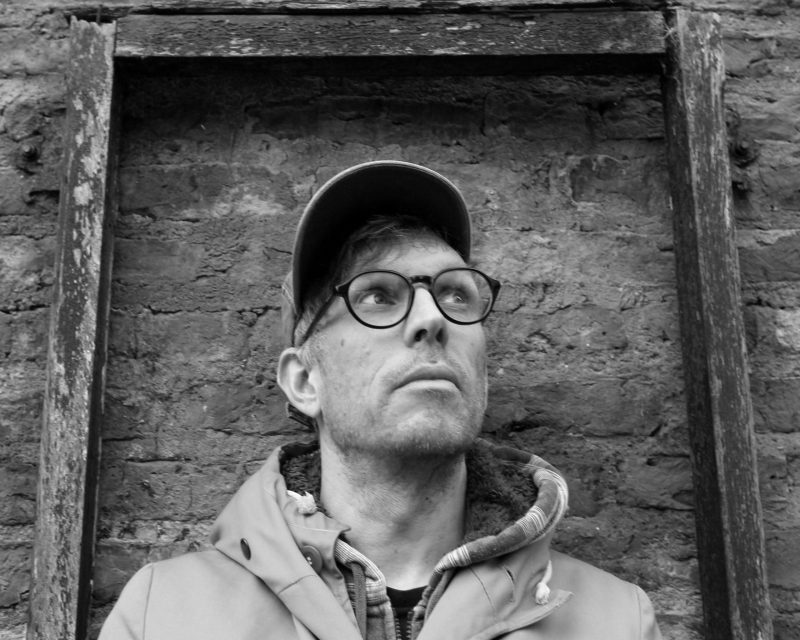
Ali Welford catches up with the inventive electronic artist as he talks about his new album, Durham Come Save Me, based on County Durham history and folklore
Photo by Mark Head
Like many corners of Durham, The Holy GrAle – the excellent Crossgate pub where Tim Head and I conduct this interview – offers a fabulous view of the city’s iconic castle and cathedral. It’s a sedate, picturesque location, yet rewind 789 years and this exact spot would have offered a bird’s-eye view of tragedy; of a brave (or perhaps foolish) high-wire artist plummeting to his death attempting a walk between the cathedral’s imposing towers. “The Archbishop of Canterbury censored the Bishop of Durham for allowing such festivities,” Tim notes. “I guess they just didn’t have as many forms of entertainment back in those days.”
This unfortunate event is just one of the curious tales recounted on Tim’s latest Faithful Johannes album; an offbeat ode to the history and culture of his adopted home titled Durham, Come Save Me.
“I’m originally from Chester in the North West, but my mum’s from Crook in County Durham,” he reveals. “My grandparents on that side left in the ‘50s because the pits were shutting, but they always idolised Crook. They had a bunch of coasters with various Crook landmarks on them – the Devil’s Stone, the little church in the marketplace where they got married…”
It’s an eye for such details – both in his surroundings and storytelling – which have made Tim a unique and admired cult figure since relocating (via Sheffield) some two decades ago. Spun with an everyday intimacy, a kitchen cupboard lo-fi ethic and a reverence for life’s mundanities, Faithful Johannes’ trademark ‘sincerity raps’ – part rap, part spoken word – have found favour on the local live circuit and been platformed across a range of stellar projects, the most recent of which, The House at Night, a collaboration with Hartlepool producer Neocia, was perhaps his most celebrated to date. While a follow-up to that 2024 record is in the offing, Durham, Come Save Me finds Faithful Johannes operating independently once more, and appropriately enough traces its roots to one of the city’s premiere cultural gatherings.
“Jenny Brewis who helps run Durham Brass Festival asked a couple of years ago whether I’d be interested in putting in a proposal, and that gave me the impetus to think more about a few ideas I had lying around.” Tim recalls. While Faithful Johannes & Neocia would go on to deliver an outstanding show at the Gala Theatre in July 2025, Tim’s initial instinct was rather different: “I originally pitched that I’d write an album over a nine month period. Jenny was supportive, but overall I think it was seen as unrealistic, overambitious… and maybe a bit expensive!”
Undeterred, Tim pursued the idea on his own terms, condensing the timeframe to 10 weeks, with writing centred around extended train journeys through the Austrian Alps and an October 2025 show with Barry Hyde, who’d recently completed his own Miners Hymns project. “Maybe it’s just my contrariness, but I ended up going more down the route of semi-tourist-aimed books like Ghost Stories of Durham,” Tim muses, on finding his own niche. “It was largely a case of following my nose. There’s a whole universe of beautiful possibilities on the subject of coal mining, but I’ve always had more of an instinct for medieval and older histories. I wanted to highlight stories people wouldn’t necessarily be aware of. Durham didn’t begin with coal mining, and it didn’t begin with the cathedral.”
Durham, Come Save Me doesn’t go right back to the beginning either, but in Neolithic Song it certainly spans further than most, vividly outlining the routines of the area’s pioneering settlers. It’s a quietly political opener – particularly given the anti-immigration rhetoric of the current council (ironically, Tim’s primary inspiration for the song came from a 200-page aggregate mining report commissioned by a previous administration), and also one which establishes a distinct sonic makeup within the Faithful Johannes catalogue.
“I wanted it to have its own boundaries, to sound timeless in the sense it could have been played a couple of hundred years ago,” he outlines. “I tried to keep it constrained to my out-of-tune piano at home, a guitar and a little sampler synth I’ve got with a limited number of sounds. Maybe it was laziness, but I also decided to keep the creek of the stool I was sitting on, the click on my headphones and a lorry going by outside my window.”
While Neolithic Song relies heavily on Tim’s busy imagination, the nine remaining tracks are concerned largely with real people and recorded events, whether depicted through first-hand accounts or via the warped lens of local myth and legend. One such character is Elizabeth Lee, an 18th century resident whose experiences – in Tim’s eyes at least – merit re-evaluation. “She probably wasn’t a witch… she was probably just… misunderstood!” he contends wryly. “In Edmondbyers church there’s an eye of God window that’s supposed to protect the church from her rising again, and her gravestone has been brought inside, to prevent people from desecrating it. She’s allegedly 12-foot deep, surrounded by garlic.”
Elsewhere, however, Tim shows little interest in the role of moral arbiter: “Alfie, Cuthbert and Me is about Alfred Westoe, who was the keeper of relics and had a bad rep from a lot of medieval chroniclers – all of which I’ve chosen to completely accept. He’d allegedly take Cuthbert out of his tomb, comb his hair and ask him for advice. That’s probably the most sacrilegious one!”
The album ends, meanwhile, amid the backdrop of the Second World War, taking cues from the diaries of Elsie Crouch, which were collected and published posthumously by her son Bill in 2010. “It’s about the anxiety and loneliness she felt living in Leadgate while her husband was stationed away in Malta. There’s lots of entries about rumours she’d heard about the night before – about bombs dropping across the North East, many of which she’d later find out were complete nonsense,” Tim says. “She had a real flair too – she would send scripts into the BBC and get her poetry in the local papers. It’s a beautiful diary. It was in the city library for years and nobody had ever taken it out. Now it’s been taken out five times – all by me… You should be the sixth!”
It’s perhaps the most striking moment on a record packed with quirks, forgotten voices and majestic storytelling; a testament to local pride, an acquired sense of home, and what can happen when an otherwise untouched history degree is finally put to good use. Durham, Come Save Me is by no means a comprehensive or unbiased account of an area or its story, yet with Faithful Johannes as narrator, it’s difficult to imagine one more compelling.
Durham, Come Save Me is out now on Win Big Records.
