Narc. Magazine Online
Reliably informed


The poet tells us his favourite places to visit in Northumbria ahead of the launch of his book, Between The Salt and the Ash, and related talks at Bailiffgate Museum, Alnwick and The Common Room, Newcastle
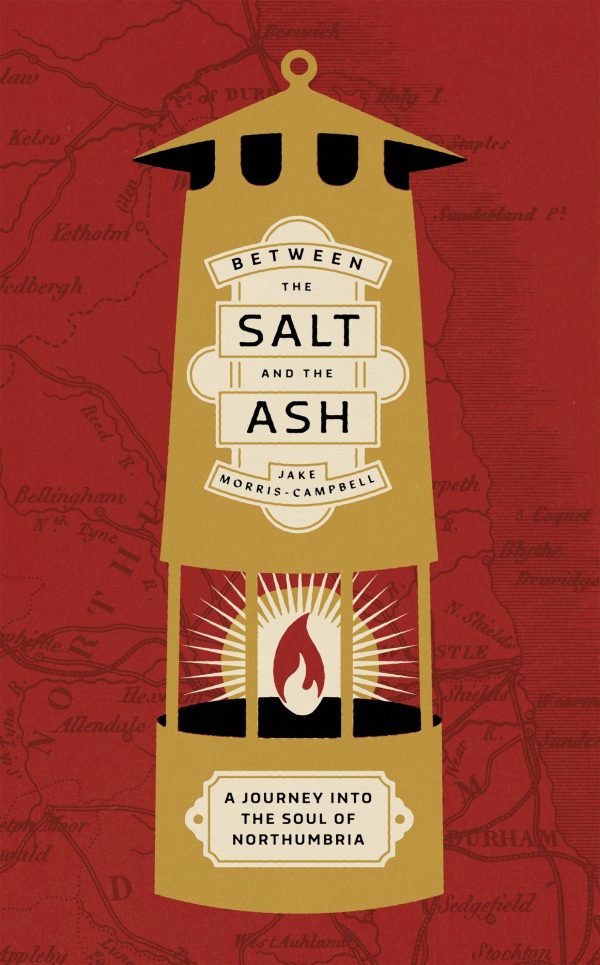
In Jake Morris-Campbell‘s latest book, Between The Salt and the Ash, the South Shields-born poet embarks on a pilgrimage across Northumbria, inspired by inheriting his great-grandfather’s miner’s safety lamp. This journey explores the deep roots and shifting identity of his homeland, uncovering tales of early Christianity, industrial legacy, and complex layers of Englishness.
On Saturday 1st March, at Bailiffgate Museum, Alnwick, and on Wednesday 19th March at The Common Room, Newcastle, Jake will be discussing his exploration and discoveries.
Ahead of the release of the book and upcoming talks, Jake gives us his top 5 favourite places to visit in Northumbria…
1. Emmanuel Head, Lindisfarne. This daymark at the north-east of Holy Island is my favourite spot on the island. It was built in the early nineteenth century and used to navigate ships safely into harbour. There’s something austere and kind of brazen about it, and I love the way it emerges all angular and bright in whitewash from the grasses as you walk round past Lindisfarne castle or approach from the sand dunes. There’s a serenity to the spot, a feeling of tranquillity which, paradoxically for an island known for pilgrimages, can be difficult to find in the height of summer. Watch out for piri-piri burr, small firework-like flowers which look beautiful but are a bugger to get off your shoes.
2. Coquet riverside and Amble town. I love strolling along the Coquet to Amble. Many of the intriguing ‘Bord Waalk’ sculptures are here and you get a great view back to Warkworth Castle. If you look carefully in the river at low tide you can see the remains of coal barges, their skeletons pressed into the riverbed – a nod to the industrial past. Amble is a town that feels on the up, but it has retained a down-to-earth charm. I’m in awe of blacksmith Stephen Lunn’s Peace Arch by the memorial clock tower, and I like to walk towards Hauxley where the terrain rises a little opening to wonderful views over to Coquet Island. Finish with a hoppy pint at Brewis Beer Co.
3. Cambois. I find the small spit of land between the rivers Wansbeck and Blyth absolutely fascinating. The beaches here aren’t as picture-postcard beautiful as their neighbours further north, but there’s a ruggedness about the place that I find beguiling. Make yourself feel small by parking up at North Blyth, where the towering cranes and docked ships are a testament to the ongoing trade and commerce of the North-East. At the ’Tute, Cambois’s former miners’ welfare hall, dancer Esther Huss and her writer partner Alex Oates are making big waves in the art world from a small, historic venue. The community-minded nature of their enterprise is absolutely brilliant to see.
4. Seaton Sluice. I couldn’t resist another entry for south-east Northumberland — the much-overlooked quarter of the county, in my view. The whole walk down from Blyth to Seaton Sluice and beyond to St Mary’s Lighthouse is stunning. I like the walk inland along Holywell Dene, too, and joining up to the magnificent Seaton Delaval Hall. But spend some time around Seaton Sluice itself (if you can pull yourself away from Harbour View chippy!) Across from the harbour you can explore Shanti Art with its idiosyncratic creations. Sticking to the coast, Collywell Bay can be a little oasis of calm away from the busier Whitley Bay beach a few miles south.
5. Jarrow and the River Don. Jarra: known for its shipbuilding past and being the start of a famous protest march to London, but in the present it’s been a little ignored. Jarrow Hall museum and St Paul’s monastery give the gen on the saintly aura of the place – from where the Venerable Bede wrote his famous works of history – but for me the outskirts of the town are where the true riches are to be found. Follow the river Don, the smaller tributary of the Tyne, through edgeland territory. Ambitious walkers will proceed another eight miles on foot following Bede’s Way to the sister monastery at Monkwearmouth, along the way experiencing the finest of South Tyneside and Sunderland.