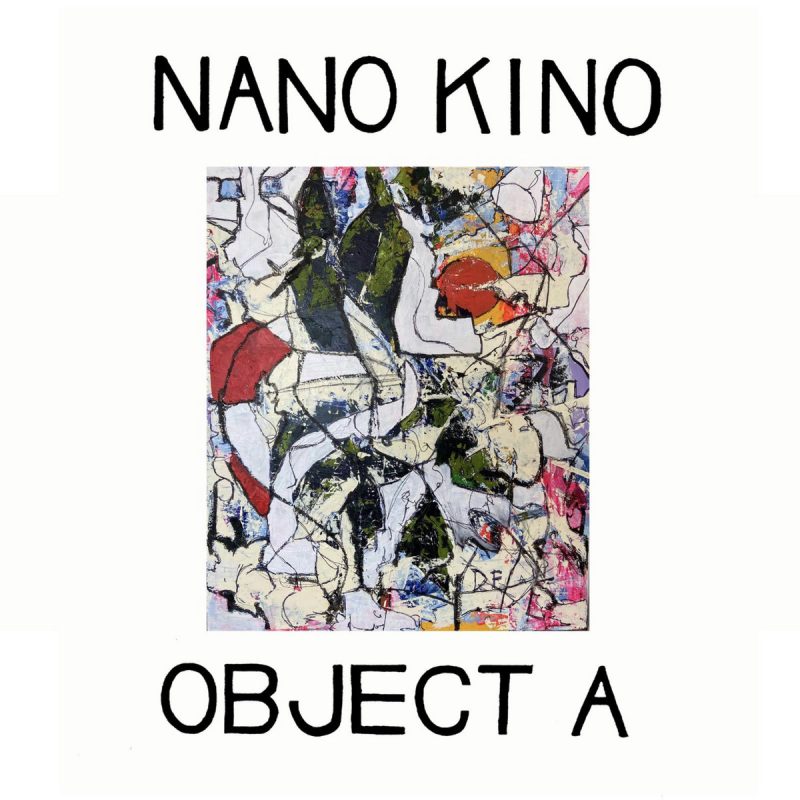
I was halfway through reviewing Object A when I caught
Nano Kino live at Last Train Home on Saturday, just after their album launch at The Cluny 2. It was one of those moments that recalibrates everything. I already liked what I was hearing on the record, but seeing them play took it somewhere else entirely. Sarah Suri’s vocals were flawless, the band were tight in the way that only comes from real time spent playing together, and the sound was so close to the recording that for a moment I had to remind myself this was live. It very much was, and it was exceptional.
Nano Kino are Sarah Suri on vocals and songwriting, Duncan Lloyd on guitar and songwriting, Tom English on drums and Phil Morgan on bass. Emerging back in 2012, they bonded through shared musical loves including Cocteau Twins, Women, Life Without Buildings and late 80s house music. Across wildly varying track lengths, Object A builds itself around hypnotic guitar melodies, intricate percussion and Sarah’s ethereal vocals, layered with distortion, unexpected countermelodies and clever lyrics that rarely end up quite where you thought they were going. There is space to take a breath, but never emptiness; even at its quietest, there always seems to be something shifting.
Towards Anon gently fades in, that Cocteau Twins reverence immediately apparent, with Sarah’s floaty vocals conjuring misty, peculiar goings-on and anticipation before a short stop. It makes for an intriguing opener. Reset follows with guitar straight in, joined by drums, bass and soft vocals asking “if I do this right”, before a mini break delivers “reset your mind”, almost subliminally. It is buoyant and interesting in equal measure, with changes in tempo keeping you slightly off-balance throughout.
And the mind keeps surfacing across Object A; resetting it, motivating it, questioning memory and knowledge, and considering how we see ourselves. ‘Motivation Envy’ was where I first thought this might be a journey towards change, the drum beat almost physically urging momentum forward as the guitars harden and everything builds. By the end of the album, I wasn’t so sure. Nano Kino are far too slippery to make interpretation quite that easy.
Alive brings hypnotic guitars, a bass break and layers of melody, lengthy but with real movement within it, while Go and Ask Her places those signature breathy vocals against something darker and more post-punk in feel. The sound becomes heavier without ever becoming gratuitously so, the vocals almost secondary for once and somehow still absolutely right. Square Eyes is probably the album’s most overtly pop moment, guitar-led, catchy and immediately likeable, before Never Seems to Happen introduces another question. Is this a memory fading, so eventually it never seemed to happen at all? Biographical or experienced? Nano Kino don’t seem particularly keen on providing a direct answer.
Then there are the smaller pieces tucked between the longer songs. The beautiful Runaway is over almost before it starts, its warm, rounded sound functioning perfectly as an interlude, while Do It Too gives voice to that internal impulse of watching what somebody else is doing and wanting it too. Childlike, perhaps, except it turns out that particular instinct isn’t necessarily kept only for childhood. Vermillion Border has purposeful, structured guitars with hints of Maxïmo Park, even Bloc Party, but it is the gorgeous percussive finish that stays with me, conjuring images of a Japanese water garden. Surfing on the Void, meanwhile, poses one of the album’s questions that really sticks; “What is knowledge if you cannot pass it on?” There’s that grey matter being prodded again.
And then How to Have Fun arrives. That bass, guitar and drum opening is a statement, layered with lush vocals and gritty guitars before a break that somehow conjures a circus ground. Yet the latter part vocals, “when you love someone, don’t know how to have fun”, turned my first impression of the track completely on its head. And it’s that kind of lyrical sleight of hand that Nano Kino delivers repeatedly throughout Object A; just as you think you have grasped what a song is saying, you then wonder if it really is saying that at all.
Pullings briefly turns the gaze back towards the self, “look at me from the outside”, before Wipeout closes the album with excellent drums, heavy guitar and its title spoken in a distorted, almost dystopian voice, layered against angelic harmony. The contrast is unsettling and beautiful, and exactly right.
On stage, Nano Kino are deceptively still, each member engrossed in their part of the delivery. But spend some time with the lyrics of this album, and you realise they are anything but static; witty, occasionally funny, tongue-in-cheek and forever nudging that grey matter. There are quirky details buried throughout, meanings that seem to shift just as you think you’ve caught them, and melodies that hang around rent-free for some considerable time (you have been warned). Fourteen tracks in, and I’m still not entirely sure I’ve worked Nano Kino out. I rather hope I haven’t, because I am loving this journey wherever it’s going.