
Narc. Magazine Online
Reliably informed

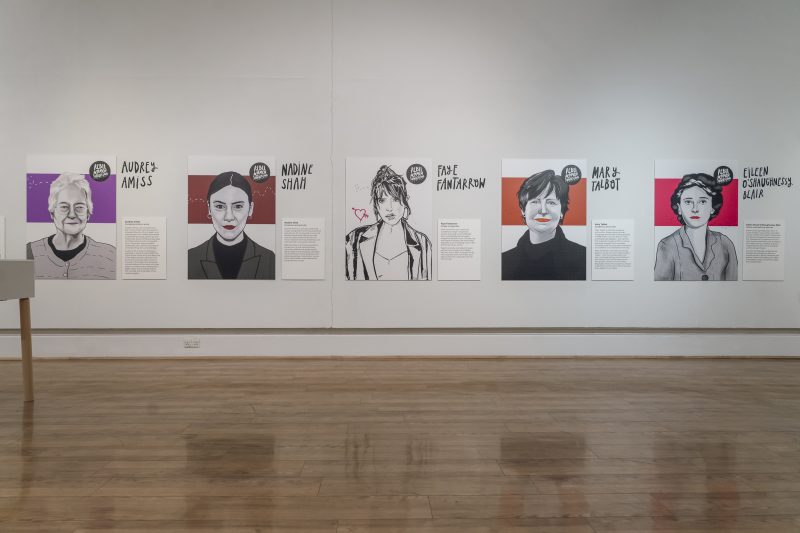
An exhibition celebrating the bold, brilliant and boundary‑breaking women who shaped Sunderland has opened at Sunderland Museum & Winter Gardens.
Rebel Women of Sunderland brings together activists, artists, campaigners and trailblazers from across the city’s past and present, celebrating their impact through immersive storytelling, bold visuals and a companion podcast series at Sunderland Museum & Winter Gardens until 1st August. At its centre are Kathryn Robertson’s instantly recognisable digital portraits, capturing the resilience and individuality of each woman.
Kathryn adds, “I started working on the Rebel Women project with Laura Brewis and Jessica Andrews in 2019. It was one of my first commissions as a freelance artist, having just gone full time around the same time.
“I was asked to draw portraits of a selection of women who had strong links to Sunderland, who were to be celebrated and have their stories told, I was familiar with lots of the women but there were also a lot that were new to me, so it was interesting and valuable to learn their stories.
“The portraits are all digital drawings and I used Photoshop and a drawing pad. I was provided with a range of relevant reference images for the women from whoever was researching and working on the project at that time. I’d use those as the main inspiration. Some of the photographs provided were very small, maybe from newspaper clippings, so it was a challenge to create a likeness.
“For one woman, Elizabeth Donnison, there was no found image reference at the time, which is explained in the text next to her exhibition image.”
Alongside Kathryn’s portraits, the Rebel Women podcast series — produced by the University of Sunderland’s Professor Caroline Mitchell, We Make Culture and Lucky Penny Audio — adds another layer to the exhibition, giving space to the voices and lived experiences behind the stories on display.
The show is further enriched by creative responses from women across the city. Pink‑Collar Gallery showcase recent community‑focused projects, from Tallulah Lines’ workshops with Wearside Women in Need to Auburn Langley’s Her Mark, a calligraphy‑led exploration of medieval women’s overlooked creative legacies. Researcher in Residence Sophie Piper highlights the work of Eileen “Dusty” Deste, an accomplished yet under‑recognised twentieth‑century photographer, inviting visitors to handle and rearrange her 1961 images of Sunderland’s Pyrex Factory to rethink how women’s labour is framed and remembered.
