Narc. Magazine Online
Reliably informed

Ali Welford chats to the North East artist about her new album, the Dance of Death
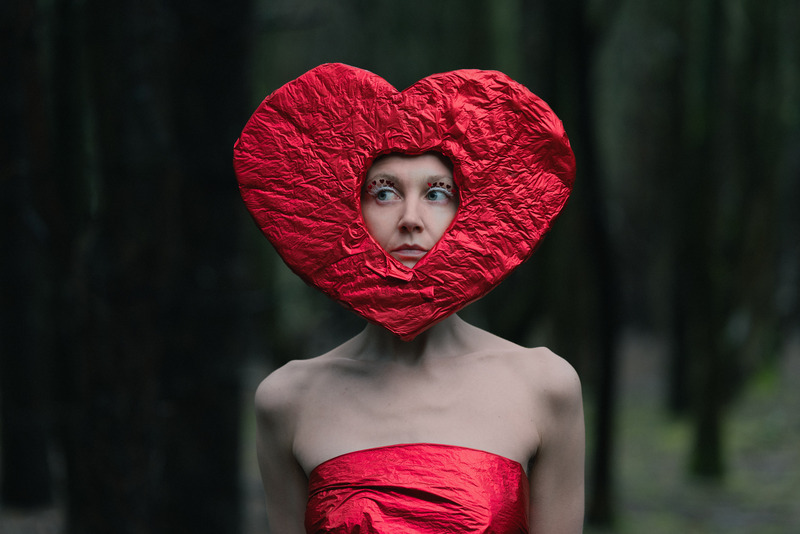
Image by Rob Irish
“I didn’t set out to make an album about death!” is the type of quote you’ll doubtless have read in countless interviews pieces over the years. I would know – I’ve typed out several myself.
It’s a recurrence which speaks to death’s unique and enduring hold over the human psyche; a subject we perennially return to, be it through the lens of experience, fascination or fear. Certainly, it was a preoccupation for the medieval worshippers, illustrators and wordsmiths who pioneered the Dance Macabre; the primordial Dance of Death whose iconography abounds in imaginations, art and religious institutions to this day. Frankie Archer, the North East artist behind that introductory quote, is merely the latest to source inspiration from this ostensibly morbid yet curiously joyful image.
“The Danse Macabre dates back to plague times in medieval Paris,” she explains for the uninitiated. “People were dropping like flies, and the churches were encouraging everyone to live good and holy lives, repent and make sure they get themselves to heaven, because nobody knew when death would come for them.” The earliest recorded visual depiction came in the form of a lost mural in the Cemetery of the Holy Innocents, near Notre-Dame cathedral. “To get that message across they depicted death as this cloaked skeletal figure who’d come over and dance with people, and that’s how it would claim them and take them onto the next life. It’s a bizarre juxtaposition and a really striking visual.”
Though inextricably linked with the French capital, Frankie – born in Hexham and raised in Consett – first experienced the Danse Macabre far nearer to home. Enraptured during a visit to Paris, the poet John Lydgate introduced The Dance of Death to England, in a translation totaling 82 stanzas. At some point in the 15th century, that vision made it’s way to Hexham Abbey, where a series of evocative wood panel paintings can still be viewed to this day. Their influence on the cover of Frankie’s debut album (created by JD Lovatt) is unmistakable, yet much like the music within, this homage is interpreted through a distinctly modern lens. “I figured that if some skeletal gadgie in a cloak came up to me and asked for a dance, I’d probably think ‘what’s going on here?’ and get my phone out and start filming it!” she laughs.
Of course, on a record itself titled The Dance of Death, that artwork merely hints to a far broader inspiration. A collection with myriad layers, subtexts and potential angles of approach, it features nine songs from centuries gone by, channelled through Frankie’s broad North Eastern accent and radical arrangements shaped by a passion for electronic music, her proficiency with a fiddle and countless hours of studio experimentation. Some – Death and the Maiden, title track The Dance of Death – are Danse Macabre staples, revived for fresh and familiar ears alike with a novel sonic outlook. Others are murder ballads recast as warnings – that death can lurk anywhere at any time, and present itself in any which form. The Outlandish Knight, for instance, sees the dashing titular character succumb to his own drowning well at the hand of the maiden intended as his next victim; while Oxford City uses a simple bar recording to equate the modern pandemic of drink spiking to the poison wine of yesteryear.
“I tend to stick to songs that are more than 100 years old,” Frankie says, concerning her selection process. “There are no limitations, so long as they resonate with me and still feel relevant today. A lot of the old folk stereotypes are outdated – the ones about strict rules, and having to present songs in their purest form without tampering with or tainting them… which is totally what I do! Lots of people are doing interesting and experimental things with traditional material now, because why not? We have the technology, and a lot of it is pretty accessible. I’ve not had a proper musical education, so I approach traditional music and electronic music – which I also love – in a really odd way. I learn music by ear, and I think that helps me be quite instinctive when it comes to ideas.
When I look through archives, I consider not what a lyric says, but why it’s saying it. I do tweak songs sometimes, or add my own lyrics – either to challenge those narratives, or to highlight that what the song is saying should be taken with lots and lots of salt
“It was great working with other people who have their own ideas, who aren’t afraid to try things and just have fun with them,” she adds, turning to the album’s studio sessions, where sonic impulses were honed and expanded alongside her co-producers Guy Massey and Fran O’Hanlon. “We added a lot of extra textural stuff. For example, I’d shout into a guitar and run it through loads of pedals and processors, and that would become a couple of seconds in a song. There’s things like that scattered throughout that album, and that’s the stuff which makes it for me. It took it from being a collection of neatly arranged songs – which is what I’d arrived with – and turned it into a proper piece of work.”
Certainly, that experimentation pays dividends on a collection covering a remarkable expanse of sonic ground. Death and the Maiden, for instance, takes cues from an earlier interpretation by Schubert (“it really slaps you in the face!” Frankie remarks), opening the record in a sweep theatrical discord and dramatic dynamism. Unabashed pop flourishes arrive via The Dance of Death and The Unquiet Grave, albeit in disparate forms. The latter’s delectable electronics and echoing chorus vocal form a dreamscape of idyllic, unsullied loveliness; quite the contrast to the latter, whose big, bold synth melodies are almost suppressed under the weight of their own distortion. Then there’s the ominous yet seductive strut adopted by In Brunton Town and Young Edwin of the Lowlands Low; precisely the tone and rhythm you sense death would use to tempt subjects into an ill-fated waltz.
Though thematically distinct from previous EPs Never So Red (2023) and Pressure and Persuasion (2024), one topic – notwithstanding death – has been a through line across Frankie’s repertoire. It’s the conundrum faced by many an interpreter of archaic words: how to square outdated, often misogynistic attitudes with the more equal, comparatively just consensus of today.
“I do think it’s important as an artist not to perpetuate the harmful narratives baked into so many traditional songs,” Frankie says. “When I look through archives, I consider not what a lyric says, but why it’s saying it. I do tweak songs sometimes, or add my own lyrics – either to challenge those narratives, or to highlight that what the song is saying should be taken with lots and lots of salt. But there’s a balance – a lot of the time the onus is on the listener to understand what’s being said and approach it critically themselves.”
Somewhat unusually, Frankie has opted against launching the record with a big hometown live show (the first opportunity for North East fans to experience The Dance of Death live will be at The Glasshouse on Sunday 27th September, where she’ll be performing alongside bandmates Amy Thatcher and Francesca Knowles). Instead, she’s something altogether more esoteric up her sleeve: a release day listening party at Hexham Abbey, complete with exclusive merch, a talk on the Danse Macabre and more.
“It feels like the album’s home,” she reflects. “The paintings that inspired it are there, and another influential person was one of its volunteers, Molly Kady. I visited one day on a whim and she told me so much about the Danse Macabre. Eventually I ended up coming back and telling her about the songs I was working on, and we’d explore how they tied into The Dance of Death and the church’s perspective on it. Because I’m not playing a gig, it felt like a chance to make more of a spectacle of it, and do something more interactive. I’ll be bringing all the costumes from the music videos – assuming they’ve not fallen apart by then! – and generally trying to open up the album and its world for everyone.”