Narc. Magazine Online
Reliably informed

We catch up with the writer, and Artistic Director of BRASH Theatre Company, as she launches her new business, which offers a gathering place for mothering folk and their stories.
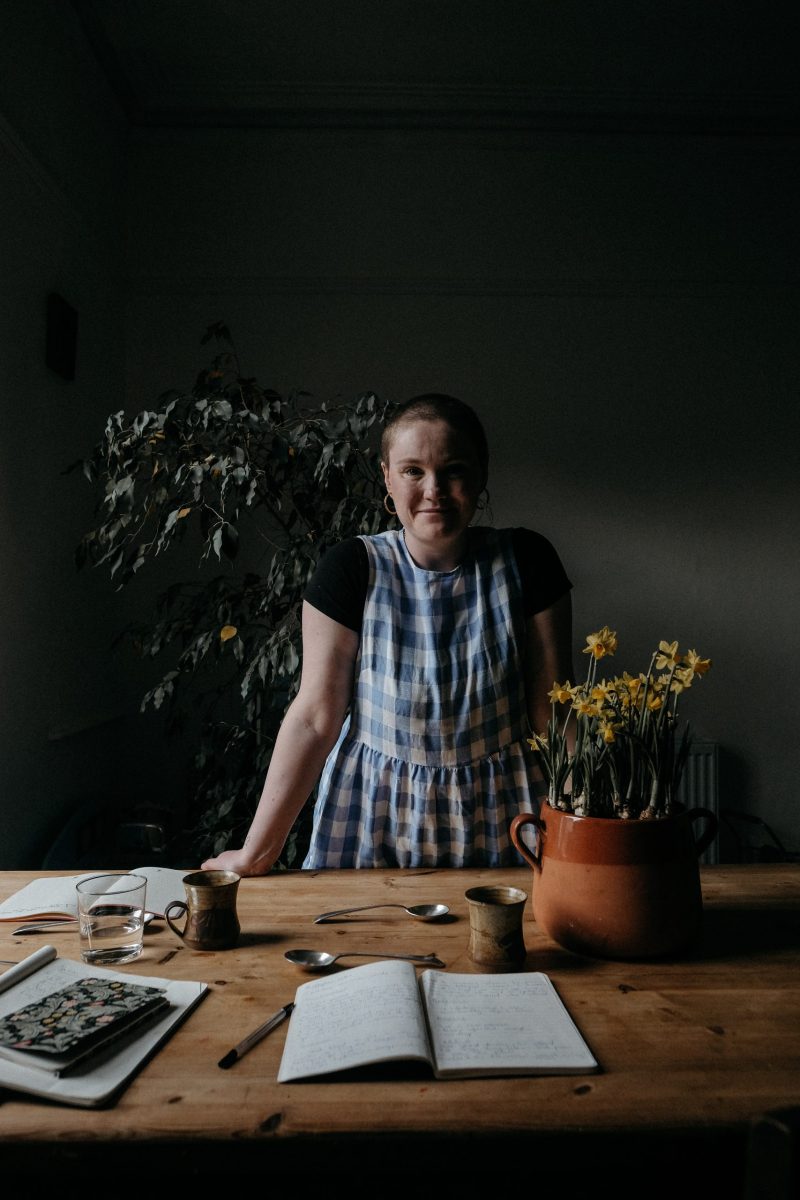
Writer, doula, and Artistic Director of BRASH Theatre Company, Bethan Kitchen is looking to reshape the way motherhood is shared and experienced through her newly launched venture, MotherFolk.
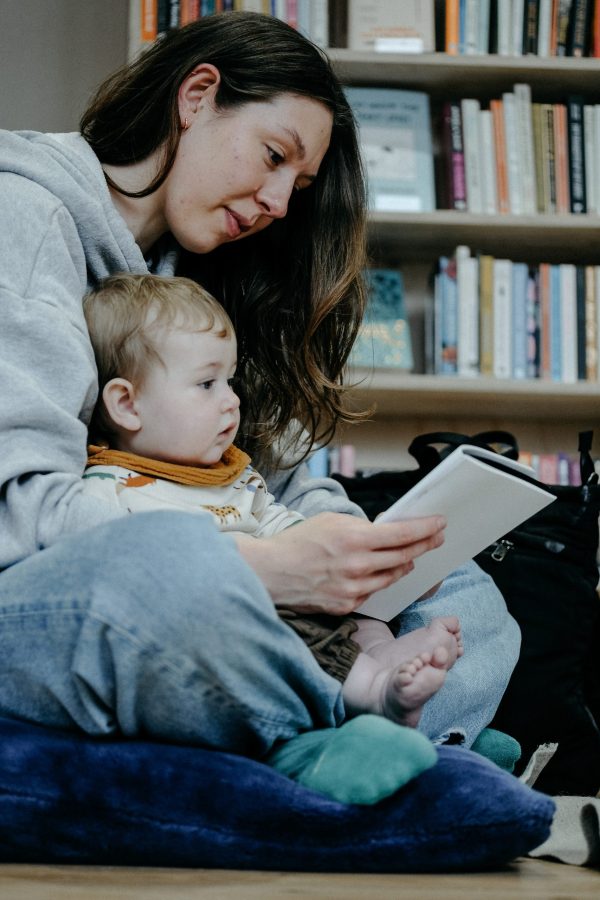
Bethan creates welcoming spaces for mothering folk to explore the power of storytelling—turning lived experiences into moments of nourishment, connection, and self-expression. It offers a range of writing circles across Jesmond, Heaton, Whitley Bay, and The Cumberland Arms, tailored to mothers and babies of varying ages. The sessions, running in line with school holidays, provide a chance to breathe, share, and reclaim motherhood on their own terms (full details can be found via their website here).
Beyond the weekly circles, Bethan is also hosting Birth Stories: A Summer Solstice Retreat Day on Saturday, 21st June, inviting mothers to reflect and write about their unique journeys in a supportive space.
We caught up with Bethan to find out more…
Briefly tell us a little about yourself and your time as Director of BRASH Theatre company.
I’ve spent the past decade working in theatre as a writer, director, and creative facilitator, most recently as Young People’s Producer at Northern Stage, where I founded the Young Directors’ Programme. I’m also the Artistic Director of BRASH Theatre Company, through which I’ve written and directed work for Northern Stage, Live Theatre, Park Theatre London, Theatre Hullabaloo, English Touring Theatre, and Streetwise Young People’s Project.
I founded BRASH in 2017 as a response to the lack of honest, supportive sex education for young people. We made shows with and for teenagers about everything from periods to victim-blaming. Through that work, I witnessed the transformative power of creativity and storytelling to help people reclaim agency over their bodies and their narratives. That realisation has stayed with me and now shapes the work I do with mothering folk—work that has felt like coming home. Supporting mother folk to rewrite the stories they’ve been handed and step fully into their own voice is where I’ve found my true purpose and potential for real, long-lasting change.
What inspired you to create MotherFolk, and what does reclaiming the motherhood story mean to you?
To be honest, MotherFolk wasn’t something I set out to create—it unfolded organically, much like the best stories I’ve written. It emerged through the rhythms of my life, particularly during the birth and postnatal period of my second child. My first experience of motherhood was lonely and disempowering; I was coerced and shamed throughout pregnancy, birth, and postnatal care, leaving me doubting my ability to mother and even my sense of self.
Writing became my lifeline; when everything else felt out of my control, the pen gave me agency. Simply by putting words on a page, I started to connect to myself in new ways, to make sense of my experiences, and to take up space in a world that wanted me to disappear. You could say the pen was my doula!
By the time I had my second baby, I was armed with knowledge and confidence, leading to a wonderful birth experience. Two weeks later, I began running writing circles for mothers, creating the space I had longed for as a first-time mum. The response was profound, revealing a deep need for such spaces. This led me to train as a doula and blend my experience as a professional writer with the values of a doula, crafting a business that supports mothers to be powerful, nourished, and communal.
Reclaiming the motherhood story, to me, means challenging the messy, contradictory narratives that society imposes on us—narratives that often leave us feeling like we’re failing. It’s about creating spaces where mothers can share their stories without judgment, realize they’re not alone, and find strength in community. Through storytelling, we resist isolation, honor our experiences, and empower ourselves and each other.
You describe writing as your doula—how can mothers begin using storytelling as a tool for self-reclamation?
For me, writing has been a steadfast companion—a doula in its own right. Just as a doula hold space for you to explore and process, to be heard, validated, and held during the transformative journey of matrescence, the act of writing provides a space to process, reflect, and reclaim one’s narrative.
Writing in this way is not so much about creating a beautiful piece of writing (although that often happens too!), but its primary function is to hold space for processing. Writing is fantastic because it helps you access your subconscious. It grounds you. It gives you control. It takes you places you didn’t know you needed to go. It’s healing. It raises questions. It doesn’t judge. It’s uninterrupted. It’s reliable.
Motherhood is full of stories – about how we should give birth; how we should parent; how we should care (or not!) for ourselves. Whether it’s in passing comments from relatives, in the ‘routine’ practices of maternity care, or in the commercial algorithms of social media, these stories are everywhere.
And let’s be honest, they all contradict each other; so no matter how you do motherhood, you are set up for failure, and with that, shame. And shame is how capitalism sells us stuff, to solve problems we think we have with our mothering.
But each time a mother tells or writes their real story to themselves and other mothers, a little bit of that story is reclaimed. We can start to sit in the stories we are living more comfortably, without shame, knowing that these stories are valid and that others see themselves reflected in that too. And when we’re comfortable with our own story, it’s much harder for society to profit from our vulnerability.
Your own journey through early motherhood was deeply shaped by anxiety and isolation. How did writing help you navigate that experience?
It helped me unravel the systems set up to make mothers feel like failures. Word by word, I examined all my encounters I’d had with the healthcare system, with insurance companies, with my workplace, with my child, and gradually, I started to unpick how it was all functioning as one big ecosystem that was breeding my shame and anxiety.
Once I figured this out, I started to use the pen to take up space with my experience. In a world that refused to see my raw, messy, wild story as valid, I got messy on the page, and made beauty out of chaos. I processed A LOT of motherhood guilt, and with that, felt closer to my child. But most importantly, I gained an immense comfort with myself as a mother, and that gave me security, strength, and happiness.
How did your experience between your first and second birth change the way you approached motherhood?
The main thing that changed was my self-confidence and trust in my instincts as a mother. I am much more able to advocate for myself and my kids in healthcare settings etc., and I am much more alert to the unhelpful stories that circulate round motherhood and function as guilt-trippers.
My experience of motherhood will always have a heaviness to it to a degree – every moment I spend with my kids, every micro-decision I make as a mother, can feel so loaded with the pressure to do right by them – but the big difference now is that I can usually acknowledge that a lot of this heaviness is coming from society’s impossible-to-fulfil narratives about how mother’s should be, rather than my actual inadequacy. This has just made me feel so much more secure in myself and my motherhood story, it’s given me self-grace and forgiveness, and it’s also reframed how I feel about caring for myself, which always felt racked with shame before.
What has surprised you most about the way mothers respond to MotherFolk’s writing spaces?
Honestly, what’s surprised me most is their response to me! Even though I’ve facilitated creative spaces for over a decade, before I started the mothers’ circles, I had real imposter syndrome about holding space. I always thought I was a great ‘ideas’ person, but not so strong in person, in the moment, reacting to the present and unexpected.
But there was something about immediate postpartum that made me uninhibited and impulsive, and the payoff of creating a community of mothers who knew each other by their first names seemed to outweigh the risk of outing myself as rubbish at running workshops!
So when I started getting reviews from the mothers who came that what I was doing was ‘the best thing about their maternity leave,’, ‘life-saving’, and ‘exactly what they needed’; when they started telling me how ‘seen’, ‘safe’, ‘heard’, and ‘validated’ I helped them feel, sometimes for the first time since they’d become mothers – I was not only balled over, but also energised to keep going, expand, deepen, and harness this power to maybe shift the culture of mothers in the North East a bit. The community of mothering folk is growing every day, and it feels very exciting to think about what it could become over time.
For those who haven’t attended, how would you summarise/describe a MotherFolk event?
Low-pressure. A sigh of relief. Judgement-free.
The space is for mothers to connect, scribble, build community, breathe, and be heard. There are no rules about how we do this. I will be there to ask you how you are, offer support, and guide you through gentle writing exercises which are designed to help you process different aspects of motherhood. These are invitations, not lessons, and you certainly don’t need to feel like a writer to get something out of it. Writing is a means to processing, not a beautiful finished product.
Everything at MotherFolk is an invitation, not an obligation. No way of mothering or thought or worry or sentence is silly or inappropriate. You never have to worry about being late. You are always welcome to move around or leave the workshop space. You and your child can use the time however you want to. There will always be toys for your baby. You will never be told off for talking to other mothers – connection is exactly why we’re there.
Each workshop takes us on a journey as individuals and as a community, and once you’re welcomed into a MotherFolk space, you will always be held as an important and respected member of a mothering community.
Most importantly, what you can expect from MotherFolk is to be really, properly, seen, heard, and trusted, as a mother, as a human.
How do you go about creating a safe space for mothers to process their stories?
The key is trust. For the space to feel safe, mothers need to feel trusted by me, and they also need to trust me and each other to treat their stories with compassion, gentleness, and respect.
It isn’t my job to judge or offer advice on motherhood. It’s my job to listen, and offer tools to help mothers find, understand, and own their stories.
MotherFolk welcomes all who identify with mothering. How have different perspectives shaped the community?
There are so many different and valid ways to mother. To deny this is simply to write another story about motherhood that sets many up for failure. Our community welcomes any folk who identify with mothering, no matter what your gender is, whether you’re a birthing person or not, or whether you still care for the children you birthed if you did birth. Who am I to define what mothering means for everyone?
Storytelling doesn’t just bring us together by identifying our commonality, it also validates our differences. The more we hear about how diverse and beautiful the world of mothering is, the more included and seen we feel for our own unique experiences.
You only have to look at the inequalities in maternity care to see the dangers of normalising one version of motherhood. Research studies show over and over global majority and LGBTQIA birthing people experience higher rates of stillbirth, maternal deaths, and premature births. And many describe being impacted by bias or discrimination.
So when we talk about rewriting the story of motherhood, this isn’t just a creative exercise; cultural stories of normality have real power and consequences. The MotherFolk community aims to resist normativity of any one story.
How do your writing circles and retreats serve mothers in unique ways, and what impact have you seen?
I don’t think anyone could answer this better than the mother folk who have experienced the circles!
“What a gorgeous experience it has been and my absolute favourite thing that I have done during mat leave – so much that I did it twice! Thank you SO much to Bethan for setting up this wonderfully safe and supportive environment where I could allow myself the time to write, and for introducing me to such amazing women and babies.”
“It really has been invaluable for both me and my child. To socialise and talk and let everything out. It has been so useful to meet other mums without it being solely based on baby activities.”
What’s next for MotherFolk? Are there any new directions or projects ahead?
In June, we have a brand new term of writing circles starting, now across four locations due to popular demand (Jesmond, Heaton, Whitley Bay, and Ouseburn).
We also have a retreat coming up that’s all about Birth Stories, and will mark summer solstice weekend too. Birth is a powerful marker of irreversible change, yet so often, birthing people are given little space to process this transformation. This retreat offers a vital space to reflect, unpack, and process your story.
Perhaps most excitingly, I am now a certified doula, which means that I can support birthing people through pregnancy, birth, and postnatally with practical and emotional needs, making sure they stay the main character in their perinatal story. As with all MotherFolk activity, I support clients with writing tools in the bag. My books are now officially open for new clients!