
Narc. Magazine Online
Reliably informed

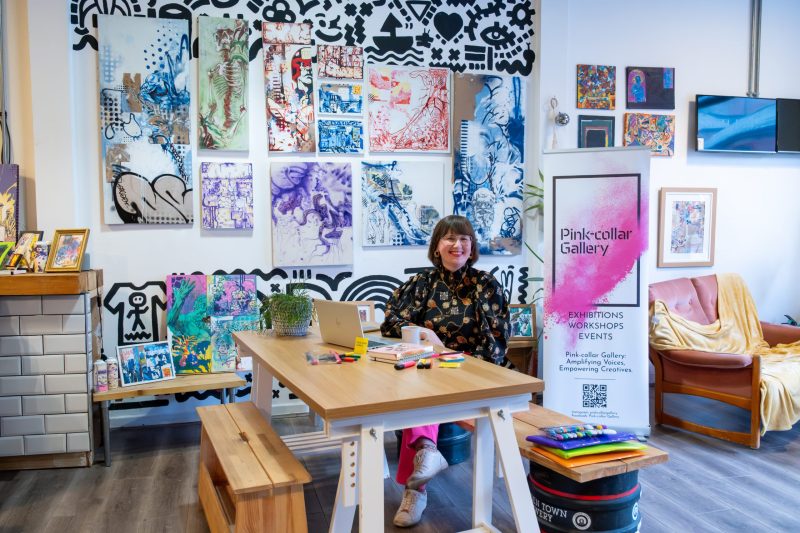
Sunderland curator Michaela Wetherell describes her dream exhibition ahead of Pink Collar Gallery’s latest exhibition series, Collective Pulse: Art in Action
Pink-Collar Gallery CIC, led by Sunderland curator Michaela Wetherell, is all about championing underrepresented voices and making art a force for social change. Michaela’s drive to address female underrepresentation and celebrate working-class identity is the heart of the gallery’s mission.
Their latest exhibition, Collective Pulse: Art in Action, at Hills Art Centre in Sunderland, explores activism, underrepresentation, and social equality through the themes of Environment, Community, Neurodivergence, and LGBTQIA+.
Kasia Parker, Kerry Lowes, Stephanie Pau and Dean Turnbull kick things off from 4th April – 5th May with a multidisciplinary exhibition that explores the intricate connections between human activity, environmental change, and the resilience of nature. Then from 10th May-9th June Olivia Askwith, Regeneration Arts, Keira Todd and Melissa Duncan look at community, followed by Sophie Keith, Julie Easton, Suzanne Hocknell and Gabriel Gustard exploring themes around Neurodivergence from 14th June – 14th July. The final exhibition on LGBTQIA+ takes place 18th July – 18th August and features work from Hannah Kate Absalom, Heather MacDonald, Sullivan Alenezi and Ellen Dixon.
Here, Michaela Wetherell tells us what her dream exhibition would look like…
I would love to create Walter Willson’s: A Community Reimagined, an immersive exhibition that brings the lost stories of the North East to life in a way that feels exciting, nostalgic, and deeply connected to the people who lived them. Pink-Collar Gallery is all about celebrating working-class narratives, proving that extraordinary stories don’t have to come from big cities or famous names—they’re found in the everyday lives of communities. Inspired by my childhood memories of growing up in Sunderland, this dream exhibition would transform an empty retail space into a fully recreated Walter Willson store, a beloved chain of shops that played a vital role in North East communities.
Walter Willson opened his first shop in Bishop Auckland in 1875, and at its height, the chain had well over 100 stores before disappearing in 1998 when the remaining locations were taken over. More than just grocery stores, they sold furniture, toys, and household goods, with women making up much of the workforce. The exhibition would pay tribute to this legacy by turning every product on the shelves into an artwork inspired by the memories, workers, and customers of these once-thriving shops. Ceramic tins, embroidered shopping lists, and glass milk bottles would replace traditional goods, each piece telling a story of the past.
Stepping inside, visitors would be immersed in the sights, sounds, and smells of a bygone era—freshly baked bread and sweets filling the air, old supermarket jingles playing softly, and voices sharing recollections of working or shopping there. Actors would bring the space to life as shopkeepers, handing out artistic “samples”—mini stories wrapped inside vintage-style packaging. A toy section would reimagine the coupon-rewarded dolls and games that so many saved up for, while visitors could collect artist-designed “coupons” to exchange for unique pieces of art.
This wouldn’t just be an exhibition—it would be a living, breathing celebration of community, proving that heritage can be exciting, interactive, and deeply personal. I’d love for it to be a space where people contribute their own memories, shaping and expanding the exhibition as it evolves, ensuring that the everyday experiences of working-class people in the North East are recognised, honoured, and never forgotten.
So if anyone wants to fund my ridiculously niche idea call me!