
Narc. Magazine Online
Reliably informed

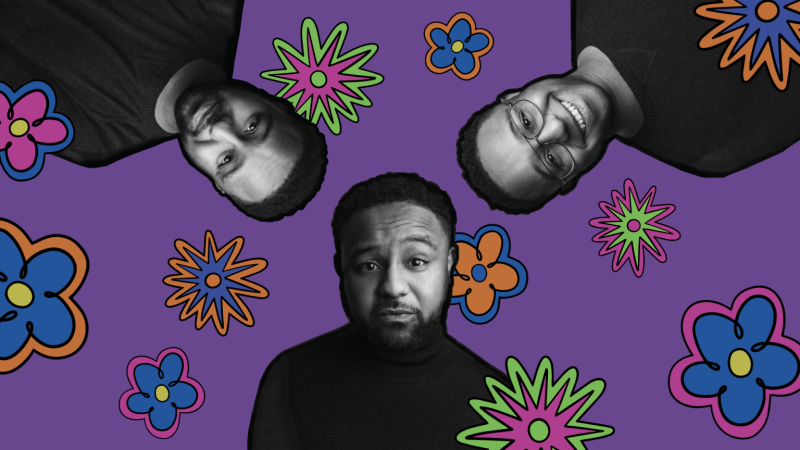
We catch up with actor and writer of Tones – A Hip Hop Opera, the gig-theatre production that combines combines hip-hop, grime and drill with opera, ahead of it coming to ARC Stockton on 23rd October
Coming to ARC, Stockton on Wednesday 23rd October, Tones – A Hip Hop Opera combines the gritty underground sounds of hip-hop, grime and drill with the melodrama of opera that goes on a journey through the depths of Black-British culture, class, and belonging.
The gig-theatre production is written and performed by Gerel Falconer, winner of Best Book and Lyrics at the Black British Theatre Awards 2024 and nominee for The Stage Debut Awards, and underscored with an original soundtrack from producer 3D Williams.
The show will be followed by a 30-minute post-show Q&A, but for those who can’t wait that long, we interviewed Gerel to find out more…
Tell us about Wound Up Theatre. How did it start and what inspires your work?
Our work is a hoist, to raise the voice of the disadvantaged whose opinions only seem to be heard when they’re chanted. On the streets we make noise and in the theatre, people listen as the stories we present reflect the human condition. The mission is reconnecting post-division cos were artists! Tones is my first Wound Up show but I know it started.
11 years ago back in 2013, a young Matt Greenough hit the Edinburgh scene. He was new to the fringe, still gave it a good go, even though he didn’t know he had to register a show. After completing the Free Fringe in a beer cellar for nine days. Matt graduated to ‘Pay to Play’ then life changed. Matt says “People started taking us seriously when Sofi and Jonny got involved in 2017”. From there the shows were: #VILE then BISMILLAH, IT’LL BE ALT-RIGHT ON THE NIGHT AND THE DEATH OF MOLLY MILLER. Every show gave a voice to the marginalised, The trend continued last year after I had arrived. To had an idea and Wound Up fleshed out the bare bones adding another banger to the roster called TONES.
Where did the inspiration for Tones – A Hip-Hop Opera come from?
I went to see Jonny Kelly. We were both drinking and then the conversation moved on to code-switching and the notion that if we don’t do it we won’t fit in.
It’s tough being working class and extra weight being black – society judges your whole race by how YOU act.
I remember sitting down in the pub in reflection thinking about how people crack whilst trying to change the face of public perception.
Assimilation is a survival tactic but you could lose yourself and your mind, in practice.
If any, what are the similarities between hip-hop, grime and drill and opera?
Anti-establishment sentiment. If you didn’t know, look up the Marriage Of Figaro. Also Visually, The use of masks in both Opera and Drill correlate more specifically. High stakes and high drama in both genres also feature lyrically. Grime bars could be operatic in the sense that in content and delivery, they’re melodramatic!
Were there any operas in particular that influenced the melodrama incorporated in Tone?
To be real, there’s no particular show it’s more about essence. To sing continuously whilst telling a story and spreading a message are the things about Opera I find most impressive.
By incorporating Opera, an artistic discipline synonymous with white privilege and exclusivity, do you think it conveys the pressures concerning race, class, and identity more effectively or with greater impact?
The show is about a character who feels ostracised. Too hood for the white kids but too posh for grime. Opera is sampled to make an example of the task in place: reveal your true identity amidst a masquerade. There’s double oppressions that he can’t escape since it’s easier to hide your class than race.
Various reports published recently highlight class as one of the biggest barriers in accessing and working in the arts. What’s your opinion of social mobility in the arts and what more can be done to address it?
Class being a factor is a given. It separates who is able to live between creative gigs and who isn’t. There should be diversity in regards to who makes financial decisions with hope they don’t maintain old ways to keep their positions. Or, we raise the wages of creatives that are economically challenged who work two or three jobs to maintain the balance. I’ve seen talented artists give it all up because the money per gig just isn’t enough. Theoretically, anyone can make art for free but the barriers arise when it comes to the industry. Facilitating self-empowerment could be something If we teach more working-class artists ways to unlock funding.
How did you bring hip-hop, grime and drill, and their varying tempos/styles, together in this production? With our bodies/nature incorporating various rhythms do you think we’re more open to art and information delivered rhythmically?
There are multiple functions of the genre choices. Sometimes it’s to do with the setting, emotional stakes and elevating different character voices. The music also evolves with time so when Jerome’s in the early 00s there’s loads of Grime. Plus at that point in the show, he’s a teen and Grime perfectly captures youthful energy. Drill is used for character depth, representing inner turmoil plus dramatic effect. Hip-hop is top choice for narration as there’s enough beats per minute to process information.
There’s an hour of rapping. Is that as hard as it sounds to do? How do you prepare for the physical demands of doing that?
Rapping for me is bread and butter. It gets harder whilst acting 19 characters, running around the stage like an absolute nutter!
Tones – A Hip Hop Opera follows the pivotal moments of lead character Jerome, AKA The Professor, and his upbringing from childhood to his departure from university. Can you elaborate on the narrative?
Tones is a one man lyrical exploration of a young mind fighting societal expectations.
Our main character Jerome struggles with integration: from awkward confrontation while Zording with Power rangers to Grime clashes while performing at pirate stations! He’s torn by an amalgamation of sensations.
Jerome’s humiliation and self-exploration sees him reinvent himself through many iterations.
The show is underscored with an original soundtrack from producer 3D Williams. How did that collaboration come about and what did they bring to the production?
3D and I have been making music for a few years so when it came to the score I thought ‘he’d know what to do here’. I’d describe moment by moment how to change the vibe, he’d send a track over and it came to life. Throughout the whole process we’ve been quite in tune. I’d say “two friends playing at primary school” and he’d supply a tune with a lively mood. Another great example is when I said “haunting classical” and he came back with the La Crimosa sample!
What do you hope audiences take from the performance?
Once audience members leave the show, they discuss how their lives relates to the themes of Tones.
